While We Are Gone...


The concept of a final desolation of the earth during the thousand-year period
described in Scripture presents a sweeping and sobering vision of the end
of human civilization as it is presently known. Drawing primarily from
Revelation, alongside the prophetic imagery found in Jeremiah and Isaiah,
this period, often called the Millennium in certain theological interpretations,
is portrayed not as a flourishing earthly kingdom populated by humanity, but
rather as a silent, emptied world in which the consequences of human
rebellion have reached their full and devastating conclusion. When examined
carefully, these passages suggest a total collapse that affects every
dimension of existence: technological, environmental, social, political, and
spiritual.
The binding of Satan, as described in Revelation, marks the beginning of this
period. An angel descends, lays hold upon the adversary, and confines him
to the bottomless pit so that he may deceive the nations no more until the
thousand years are fulfilled. This detail is significant not only for its spiritual
implication, but also for what it reveals about the condition of the nations
themselves. If there are no nations left to deceive, then the systems,
structures, and populations that once defined global civilization have already
been brought to ruin. This aligns closely with the language of Isaiah, which
declares that the earth is utterly emptied and utterly spoiled, and that the
Lord has spoken this word. The destruction is not partial, nor is it symbolic
of mere political upheaval; it is comprehensive and physical, touching the
entire globe.

In considering the technological achievements of humanity, such as space
exploration, the implications are profound. Humanity’s ventures beyond the
earth, once seen as the pinnacle of scientific advancement and ambition,
would come to a complete halt. Satellites would drift aimlessly in orbit, no
longer maintained or guided by ground control systems. Space stations,
once inhabited by astronauts conducting research and observation, would
become silent relics, eventually succumbing to decay or orbital collapse.
Rockets, launch facilities, and research centers would stand abandoned,
their purpose rendered meaningless in a world devoid of human life. The
ambition to explore the cosmos, rooted in curiosity and dominion, would be
extinguished in the stillness of a desolate earth.
Military organizations, which have historically been among the most
structured and resource-intensive institutions of human society, would
likewise cease to exist. Armies, navies, and air forces depend upon
command structures, communication networks, and logistical support, all of
which require human participation. In the absence of humanity, weapons
systems would fall silent. Tanks would rust in place, aircraft would remain
grounded or crash without maintenance, and naval fleets would drift or sink.
The immense infrastructure dedicated to defense and warfare would become
useless, overtaken by time and the elements. The prophetic description of
the earth being without form and void suggests not only a lack of population,
but also a dismantling of the organized systems that once governed human
conflict.
Modes of travel would also be profoundly affected. Automobiles, once
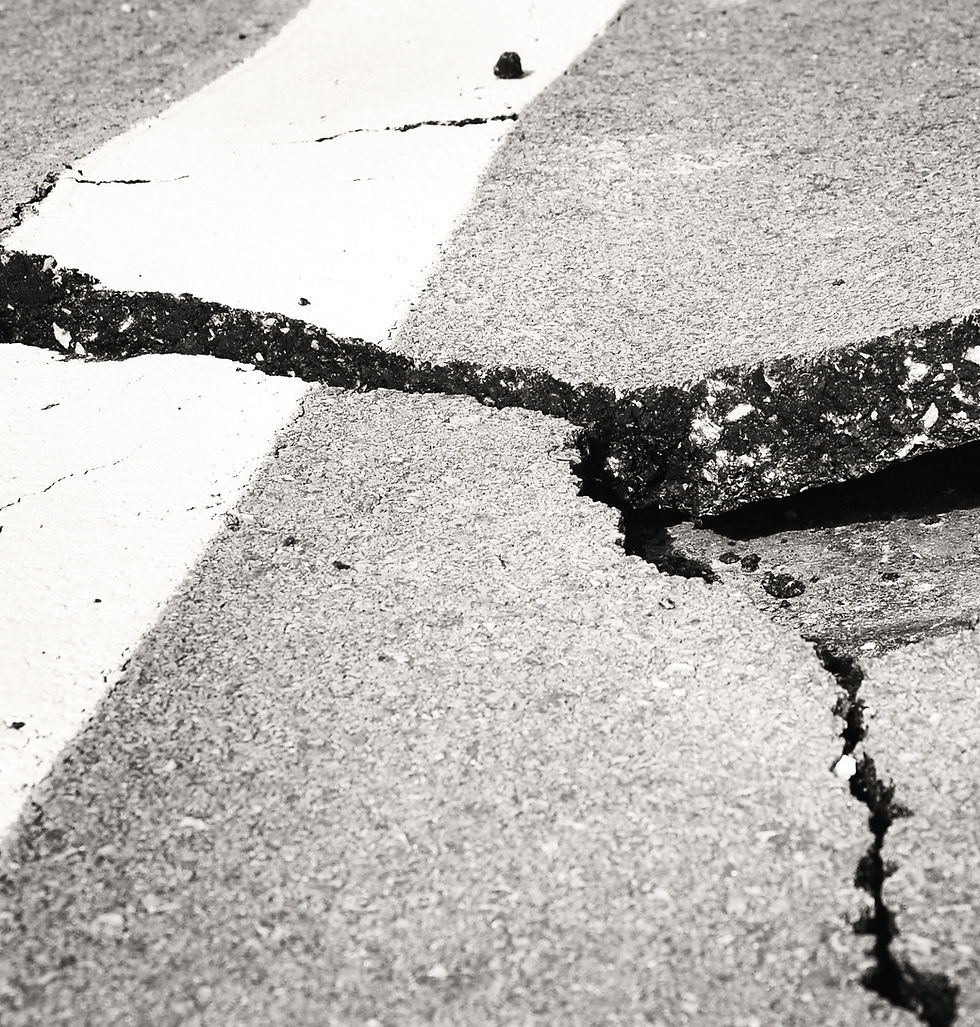
symbols of personal freedom and mobility, would be left scattered across
highways and streets. Without maintenance, fuel, or operators, they would
gradually deteriorate. Roads would crack and become overgrown, bridges
would weaken and collapse, and the intricate networks of transportation that
connected cities and nations would dissolve. Air travel would cease entirely,
with airports abandoned and aircraft left to decay. Rail systems, dependent
on precise coordination and energy supply, would grind to a halt, their tracks
eventually reclaimed by the earth. Sea and ocean mobility would follow a
similar fate; ships would drift without crews, ports would fall into disrepair,
and the vast systems of global trade conducted across maritime routes would
vanish.

Housing and urban environments would undergo a dramatic transformation.
Cities, once vibrant centers of human activity, would become empty shells.
Skyscrapers, homes, and public buildings would stand as silent monuments
to a vanished population. Without maintenance, structural integrity would
weaken over time. Weather and natural forces would gradually reclaim these
spaces. Jeremiah’s vision of cities being broken down at the presence of the
Lord and by his fierce anger underscores the extent of this destruction. It is
not merely abandonment, but an active dismantling brought about by divine
judgment and natural decay. ** Under the level of devastation described in
biblical passages, widespread, healthy vegetation reclaiming cities in the
usual sense is not possible in any stable or recognizable way throughout the
period.
If the conditions outlined in Revelation sixteen, Isaiah twenty-four, and
Jeremiah four are taken together, the environment is not merely abandoned
but profoundly altered. Water systems are corrupted, extreme heat scorches
the earth, and later the physical structure of the land is violently disrupted.
Seasons are destabilized, and light itself is at times diminished or distorted.
Under such circumstances, the basic requirements for plant life—reliable
water, moderate temperatures, stable soil, and predictable cycles of light—
are severely compromised.
In the immediate aftermath of these events, most existing plant life would
certainly perish. Crops would fail first, followed by more resilient vegetation.
Forests could be burned, uprooted, or unable to regenerate due to erratic
climate conditions. The imagery in Jeremiah of a land that is “without form
and void” and devoid of birds strongly suggests ecological collapse, not
gradual overgrowth. There would be no coordinated ecosystems, no forests
reclaiming cities in a balanced sense, and no agricultural cycles tied to
seasons.
So, the more precise way to describe it is this: the earth would not be actively
“reclaimed” by thriving plant life as we often imagine in post human
scenarios. Instead, it would exist in a largely barren, unstable state, with zero
biological survival. There would be nothing to restore order or beauty within
this broken environment.
This aligns closely with the tone of the prophetic descriptions. The emphasis
is not on nature healing and flourishing in humanity’s absence, but on a world
brought low, stripped of its productivity, and left in a condition that reflects
judgment rather than renewal.
Second Peter is one of the strongest passages describing the intensity of the
final judgment: the day of the Lord comes suddenly, the heavens pass away
with great noise, and the elements melt with fervent heat, leaving the earth
and its works exposed or burned up. It emphasizes total dissolution of the
present order rather than partial damage. When you place that alongside
Revelation, where Satan is bound, and the desolation imagery in Jeremiah,
it does support the idea of a world emptied of normal life. The only “life forms”
present would be Satan and his angels.
The texts clearly describe the removal of human society and the collapse of
the systems that sustain life as we know it. Jeremiah’s language—no man,
no birds, fruitful places turned wilderness—strongly points toward ecological
devastation. Second Peter intensifies that by describing a kind of elemental
unmaking. Taken at face value, that leans toward total extinction of earthly
life.
However, Scripture distinguishes between physical life and spiritual beings.
Satan and his angels are not dependent on the earth’s environment in the
way humans, animals, or plants are. Revelation shows Satan bound in the

abyss, not roaming freely across the earth interacting with a physical
environment in the normal sense. That detail matters. It suggests
confinement and restriction, active observation of a ruined biosphere.
So, the idea that Satan and his angels would be left to “walk the earth”
contemplating the devastation is directly stated. Satan is restrained from
deceiving, effectively cut off from influence over nations because there are
none functioning. His condition is one of limitation and isolation, no longer
dominion over a silent planet.
Reflection of rebellion in the absence of anything left to corrupt lines up
thematically with the passage. The thousand-year binding is understood as
an imposed inactivity. With no nations to deceive and no systems to
manipulate, the consequences of rebellion are fully exposed. There is
nothing left to distort or control. In that sense, the desolation itself becomes
a testimony.
The trajectory of the descriptions points toward a world that is functionally
lifeless. The earth is a stage of ruin.
The passages support a condition where human life and organized
ecosystems are gone, Satan is bound and unable to act, and the earth
stands in a state of profound desolation. The notion of Satan and his angels
existing as the only conscious beings connected to that scene fits within a
theological interpretation, but the key emphasis of the text is not their
observation of the ruin—it is their restraint and the finality of the judgment
that produced it.
Second Peter uses language that is deliberately forceful: the heavens pass
away with a great noise, the elements melt with fervent heat, and the earth
and its works are burned up or laid bare. To understand what is being
described, it helps to slow down and consider what is meant by “elements,”
what kind of “burning” is in view, and how this fits with the broader prophetic
picture developing.
The word translated as “elements” points to the most basic components of
the created order. In the ancient world, that included what we would call the
fundamental building blocks of the physical universe—earth, air, fire, and
water—but the intent goes deeper than a simple list of materials. It conveys
the idea of the underlying structure of the world itself. In modern terms, one
might think of the very fabric of matter: the substances, forces, and bonds
that hold everything together. So when the passage speaks of the elements
melting, it is not describing a surface fire that consumes objects while leaving
the planet intact; it is pointing toward a dissolution at the most basic level of
the physical order.

The phrase “melt with fervent heat” reinforces this. Melting implies that solid,
stable forms lose their structure. What was fixed becomes fluid, what was
dependable becomes unstable. If applied on a global scale, this suggests a
breakdown of the earth’s integrity: rocks, metals, and the crust itself losing
cohesion. The idea is not merely that cities burn, but that the ground beneath
them is fundamentally altered. Mountains, which are often used in Scripture
as symbols of permanence, would not withstand such conditions. This
connects closely with other prophetic descriptions where mountains are
leveled, islands disappear, and the surface of the earth is violently reshaped.
The statement that “the earth also and the works that are therein shall be
burned up” extends the scope beyond natural structures to everything
humanity has built. Every work—cities, machines, monuments,
infrastructure—would be consumed. But the wording suggests more than
destruction by flames; it implies exposure and removal. We might consider
the rendering as “laid bare,” which carries the sense that nothing remains
hidden or preserved. The accumulated achievements of humanity, whether
technological, cultural, or economic, are stripped away entirely.
When we place this alongside the earlier discussion of the seven last
plagues, the progression becomes clearer. The plagues dismantle life
systems—health, water, climate, political order—while this final burning
addresses the physical framework itself. It is as though the judgment moves
from the surface of human experience down into the very structure of
creation. What was already uninhabitable becomes, at least for a time,
fundamentally unfit to sustain life at all.
This has important implications for the condition of the earth during the
thousand-year period referenced. If the elements themselves have been
affected to this degree, then the earth is not simply abandoned; it is altered
at its core. The instability would explain why no organized life—human,
animal, or plant—could function in any normal way. Even the cycles that
depend on stable physical conditions, such as weather patterns and
seasons, would be describing the collapse of the physical order that makes
environment possible.
In scientific language, life, weather, seasons, and the periodic table all

depend on stable physical laws: matter, energy, time, and predictable
interactions between elements. Once God removes all known elements, we
are not just talking about removing substances—we are seeing the removal
of the entire chemistry of existence. Without elements, there is no hydrogen
or oxygen for water, no carbon for organic life, no nitrogen for atmosphere,
and no iron or silicon for planetary structure. At that point, we are no longer
describing a planet with conditions—we are describing the absence of the
building blocks of physical reality as we understand it.
Similarly, weather and seasons are not independent phenomena. They are
expressions of atmospheric chemistry, solar energy, axial tilt, and planetary
rotation. If those underlying systems are removed or rendered nonfunctional,
then weather does not “fail” in the usual sense—it ceases to be a meaningful
concept because there is no atmosphere to behave dynamically, and no
stable system in which change can occur.
So the most accurate way to phrase what we are describing is something
like this:
It is a condition in which the physical framework of creation has been fully
dismantled, leaving no stable matter, no active atmospheric system, no
cyclical time-based processes such as seasons, and no chemical basis for
life or interaction. In such a state, the earth is not simply lifeless; it is
functionally unstructured, lacking the necessary components for nature itself
to operate as a system.
Another way to express it, more succinctly, would be:
A world in which matter has lost its organized form, natural laws no longer
produce observable cycles, and the conditions required for life, weather, and
planetary processes have ceased to function.
One important clarification, though: this kind of description moves beyond
what physical science or even most interpretive readings of II Peter strictly
require. The passage uses dramatic, cosmic language, explicitly defining the
annihilation of all elements and the elimination of physical law itself. So what
we are constructing here is a maximal conceptual extension of the imagery—
useful as a theological picture. The earth would exist, but not as a balanced,
life-supporting system.
At the same time, it is worth noting that the passage in II Peter continues
beyond destruction to renewal. It speaks of looking for new heavens and a
new earth in which righteousness dwells. That context matters, because it
shows that the melting and burning are not an end in themselves. They serve
as a clearing away of the present corrupted order in preparation for
something entirely reconstituted. The language of dissolution is therefore
paired with the idea of re-creation.
So, when taken seriously, the imagery of elements melting and the earth
being burned up points to a comprehensive unmaking. It is not only limited
to visible destruction but reaches into the fundamental nature of the physical
world. Everything that once provided stability—matter, structure,
environment, and human achievement—is undone. What remains is not a
functioning ecosystem or civilization, but a world reduced to a state that
reflects the full consequence of judgment, awaiting whatever form of
restoration follows.
If II Peter is taken in the strongest literal sense—where the present physical
order is fundamentally dissolved, the “elements” lose stability, and the earth
and its works are fully burned up or exposed—then the question of what life
could exist becomes very narrow.
Under ordinary natural conditions, life depends on stability: consistent
chemistry, usable water, breathable atmosphere, and predictable energy
from the sun. If those baseline structures are significantly disrupted, then
complex life forms—humans, animals, and plants—would not be able to
persist in any way. Even microorganisms, which are far more resilient than
larger organisms, will chemically and environmentally be rendered non-
existent under such conditions.

So if the passage is understood as describing a collapse of the normal
created order rather than simply widespread surface destruction, then
natural life would be reduced to one of two possibilities:
First, no independent biological life at all. That is the most direct implication
if “elements melting” is taken to mean a breakdown of the physical systems
that support organized matter. In that scenario, even microbial ecosystems
would fail because the conditions that allow structured chemistry would no
longer hold in a stable way. The earth would exist in a state of judgment and
transition rather than ongoing biological activity.
Second, the limited survival of life is isolated or divinely sustained. Scripture
does not describe mechanisms, but it does repeatedly affirm that the life of
angels ultimately depend on divine preservation. If anything were to persist,
it would not be because the environment naturally supports it, but because it
is specifically upheld. That would not resemble ecosystems or biological
continuity as we understand them; it would be exceptional and constrained.
What is important in the biblical framing is that the emphasis is not on what
life can biologically endure, but on the theological point: the present order is
not permanent. II Peter uses cosmic language to strip away the assumption
that matter, stability, and natural law are ultimate. Everything that appears
fixed is portrayed as temporary and subject to dissolution.
This also means that the passage is not primarily trying to map out a detailed
scientific state of survivable life during that period. Its focus is on judgment
and replacement—what exists is not the continuation of creation in altered
form, but the removal of the present order in preparation for a renewed one.
So, in strict terms aligned with our reading: apart from direct divine
preservation, there is no clear basis in the text for stable, self-sustaining life
continuing under those conditions. Any remaining life would be exceptional
rather than systemic, and the dominant picture is one of cessation of normal
biological existence rather than adaptation to it.
The earth is left desolate and undone, stripped of all order that once upheld

creation, stripped of the ordered substance that once sustained it. All that
once held creation together has been undone, so that matter itself no longer
serves as a stable foundation. There is no living thing to mark the passage
of time, no breath of life to witness the passing of moments, and no
movement of nature to signal change or renewal. There is no life to mark its
passing, no voice of nature, and no witness of movement or breath. The
heavens yield no weather, for the systems of air and water have ceased their
appointed course. The seasons no longer turn, for time itself no longer
speaks through growth or decay. There is no spring to awaken, no summer
to increase, no autumn to wither, and no winter to still. The appointed order
of times and seasons has fallen silent, and the earth no longer moves
through its appointed course. There is no atmosphere to gather wind or form
cloud or bring rain. The skies do not shift or stir, for the cycles that once
governed them have ceased. There is no storm, no calm, no warmth, no
cold—only an unchanging absence where motion once existed. All that once
composed the substance of the world has fallen away from stability, so that
the elements no longer hold their form. What remains is not a living earth in
ruin, but a creation emptied of its structure, silent in its vast absence, awaiting
the appointed renewal beyond judgment. What remains is not a living world
in ruin, but a world that has been emptied of the very principles that once
allowed it to exist as a functioning creation.
The environmental impact of this period would be both destructive and
restorative in different respects. Isaiah’s description of the earth being turned
upside down and emptied suggests catastrophic events that disrupt
ecosystems on a global scale. Fresh waters of lakes and rivers could
become polluted or altered due to the collapse of infrastructure and possible
preceding judgments. Dams will fail, flooding regions, while other areas
could experience drought. Without human management, agricultural
systems would collapse, leading to widespread elimination of vegetation
patterns. Nature, in its totality, would become resistant to reasserting itself.
All conditions are of chaos rather than harmony.
Animal life would also be deeply affected. Domesticated animals, dependent
on human care, would face extinction or drastic population decline. Wild
animals might initially expand into areas once occupied by humans, but the
broader environmental upheaval could lead to instability in food chains and
habitats. Sea dwelling creatures would not be immune; if the prophetic
judgments include the pollution or destruction of oceans, as suggested
elsewhere in Revelation, marine ecosystems will suffer massive die-offs. The
balance of life, both on land and in water, would be disrupted in ways that
reflect the overall desolation described in Scripture.
The atmosphere itself will undergo significant transformation, as implied by
the prophetic language of cosmic disturbance found throughout biblical texts.
Darkened skies, altered climate patterns, and the lingering effects of divine
judgments will render the environment hostile. This would further reinforce
the uninhabitable nature of the earth during this period. The absence of
human activity would eliminate pollution from industry and transportation, yet
the preceding destruction might leave long-lasting scars on the planet’s
systems.
Spiritually, this period represents a profound pause in the narrative of human
redemption. With Satan bound and humanity absent, the usual dynamics of
temptation, repentance, and faith are suspended. Religious groups,
institutions, and practices would no longer exist in their earthly form.
Churches, temples, and places of worship stand empty in patience for their
destruction. Their purpose fulfilled or rendered obsolete in light of the
completed phase of divine judgment. The awareness of God’s sovereignty
would be absolute, yet not mediated through human experience during this
time on earth.
On a global scale, nations as political entities would cease to function.
Borders, governments, and economies would disappear along with their
populations. The distinctions that once defined humanity—cultural, linguistic,
and national—would no longer have any practical meaning. The prophetic
vision of the earth being utterly emptied emphasizes the universality of this
condition; no region or people group is exempt excepting God’s election. The
world, once characterized by diversity and activity, becomes a unified
landscape of silence and ruin.
The thousand-year period described in these biblical passages presents a
comprehensive picture of desolation that touches every aspect of existence.
From the heights of technological achievement to the depths of natural
ecosystems, nothing remains unaffected. Human civilization, in all its
complexity and ambition, is brought to a complete cessation. The earth itself
becomes a testimony to the consequences of sin and the certainty of divine
judgment. Yet within this stark portrayal lies an implicit promise: that this
period is not the conclusion, but a prelude to a final restoration and renewal
that follows in the unfolding of the biblical narrative.
The concept of a final desolation of the earth during the thousand-year period
described in Scripture presents a sweeping and sobering vision of the end
of human civilization as it is presently known. Drawing primarily from
Revelation chapter twenty, verses one through three, alongside the prophetic
imagery found in Jeremiah chapter four and Isaiah chapter twenty-four, this
period, often called the Millennium in certain theological interpretations, is
portrayed not as a flourishing earthly kingdom populated by humanity, but
rather as a silent, emptied world in which the consequences of human
rebellion have reached their full and devastating conclusion. When examined
carefully, these passages suggest a total collapse that affects every
dimension of existence: technological, environmental, social, political, and
spiritual, extending even to the ordered rhythms of time that govern the
seasons of the earth.
The binding of Satan, as described in Revelation, marks the beginning of this

period. An angel descends, lays hold upon the adversary, and confines him
so that he may deceive the nations no more until the thousand years are
fulfilled. This detail reveals not only a spiritual restraint, but also implies the
absence of active nations and peoples. Isaiah’s declaration that the earth is
utterly emptied and utterly spoiled reinforces the idea that the systems
sustaining human life have ceased. In such a condition, the regular cycles
that humanity depends upon, including the predictable sequence of seasons,
would no longer serve their former purpose. The earth continues to exist, but
its ordered productivity and its role as a habitation for humanity are
fundamentally altered.
Considering the technological achievements of humanity, such as space
exploration, the implications remain profound. Satellites, space stations, and
exploratory probes would persist only as remnants of a former age, no longer
maintained or directed. Without human oversight, their orbits would
eventually decay or drift. The same principle extends to earthly systems.
Military organizations would dissolve, and all modes of travel—automobile,
air, rail, and sea—would come to a standstill. The infrastructure that once
depended upon seasonal patterns for scheduling, agriculture, and
commerce would become irrelevant. The seasons, once closely tied to
planting, harvesting, and travel conditions, would be diminished entirely in
their capacity, their significance profoundly undone.
Housing and cities would reflect this abandonment. Structures built with
careful consideration of seasonal weather patterns—insulation for winter,
ventilation for summer, drainage for rains—would await their demise. Over
time, exposure to the elements would accelerate their decay. Jeremiah’s
vision of a land without man and cities broken down suggests not only
immediate destruction, but also ongoing deterioration under the influence of
natural cycles that continue without restraint or maintenance.
The seasons themselves, however, may not remain stable or familiar. The
prophetic language found in Isaiah, describing the earth being turned upside
down and its inhabitants scattered, suggests a disruption that could extend
to the very mechanisms governing climate and seasonal change. If the earth
experiences axial disturbance, atmospheric alteration, or divine judgment
affecting the sun, moon, and stars—as is described in various prophetic
passages—then the regularity of spring, summer, autumn, and winter could
be thrown into disarray. Seasonal transitions might become extreme,
irregular, or even indistinguishable. Periods of prolonged darkness or light,
unseasonal temperatures, and unpredictable weather patterns could
dominate the landscape, contributing to the overall desolation. These things
will occur before the end.
The environmental consequences of such disruption would be immense.
Fresh waters of lakes and rivers, already affected by the collapse of human
systems, would further suffer from lack of precipitation and temperature
shifts. Earth’s upheaval will create floods without warning, followed by
extended droughts. The absence of stable seasons would prevent the
normal regeneration of ecosystems. Forests fail to cycle through growth and
dormancy, and plant life perishes in unstable conditions.
Animal life is forced to face extinction. Many species depend on seasonal

cues for migration, reproduction, and survival. Birds that rely on changing
daylight to guide migration would become disoriented. Mammals that
hibernate based on temperature cycles fail to enter or emerge from
hibernation at appropriate times. Marine life, influenced by ocean
temperatures and seasonal currents, would also be affected, leading to
widespread collapse of aquatic ecosystems. The disruption of seasons
would therefore compound the already severe impact of a humanless world.
Atmospheric conditions would likely reflect this instability. Without the
moderating influence of stable seasonal cycles, weather systems could
become more volatile. Storms might increase in intensity or frequency, while
other regions experience prolonged stagnation. The skies themselves, as
described in prophetic imagery, could appear darkened or altered,
reinforcing the sense of a world removed from its former order. The interplay
between sunlight, temperature, and atmospheric circulation—key drivers of
seasons—would no longer operate in a life-sustaining manner.
Spiritually, religious observance would vanish. The earth would persist in a
state where time continues, but history, as shaped by human action, is
ended.
In conclusion, the inclusion of the seasons within this prophetic vision
deepens the understanding of the totality of desolation described in
Scripture. Not only are human systems brought to an end, but even the
natural rhythms that once sustained life are either rendered meaningless or
fundamentally disrupted. The cycle of seasons, once a symbol of continuity
and renewal, becomes either a silent repetition without purpose or a broken
pattern reflecting the upheaval of the earth itself. This reinforces the
overarching message of these passages: that the final judgment
encompasses all aspects of existence, leaving the earth in a condition that
awaits eventual restoration beyond this thousand-year period.
When the seven last plagues described in Revelation chapter sixteen are
considered alongside the already desolate condition drawn from Revelation
twenty, Jeremiah four, and Isaiah twenty-four, the picture does not merely
intensify—it becomes absolute in its completeness. These plagues represent
the final outpouring of divine wrath prior to the condition described, and they
function as the direct cause of that global collapse. In other words, the
desolation is not an isolated state; it is the outcome of a sequence of
judgments that systematically dismantle every remaining support of life and
civilization.
The first plague, grievous sores upon those aligned against God, signals the
breakdown of human health on a massive scale. This is not simply disease
as we understand it, but a targeted affliction that resists remedy. Modern
medicine, already rendered ineffective by the collapse of infrastructure,
would offer no relief. Hospitals, research facilities, and pharmaceutical
systems would be overwhelmed or abandoned entirely. The suffering would
contribute to widespread death, accelerating the depopulation that leads into
the empty earth described in earlier passages.

The second and third plagues strike the seas, rivers, and fountains of waters,
turning them to blood. This imagery, whether understood literally or as a
symbol of total contamination, points to the complete destruction of the
planet’s water systems. Oceans, which sustain vast ecosystems and
regulate climate, would become inhospitable to life. Marine creatures would
perish in unimaginable numbers. Rivers and freshwater sources, essential
for drinking, agriculture, and sanitation, would no longer support life. This
alone would bring human civilization to the brink of extinction. The
environmental consequences would extend far beyond humanity, collapsing
entire biological networks and leaving the earth in a state that aligns with
Jeremiah’s vision of no birds and no fruitful place remaining.
The fourth plague, in which the sun scorches humanity with intense heat,
suggests a dramatic alteration of the atmosphere and the earth’s relationship
to solar radiation. The delicate balance that governs temperature and
seasons would be shattered. Instead of the predictable cycle of warming and
cooling, there would be extreme, destructive heat. Crops would fail instantly,
ecosystems would burn or wither, and any remaining human populations
would face unbearable conditions. This would further destabilize what little
remained of seasonal order, reinforcing the idea that the natural rhythms of
the earth are no longer functioning in a life-sustaining way.
The fifth plague brings darkness upon the seat of the beast, a darkness so
profound that it causes anguish. This is not ordinary night, but a suffocating
absence of light that disrupts both physical and psychological stability.
Energy systems, already failing, would collapse completely in such
conditions. Solar power would cease, and even basic visibility would be lost.
The alternation between day and night, a fundamental aspect of timekeeping

and seasonal experience, would be thrown into confusion. The world would
oscillate between extremes—scorching heat and oppressive darkness—
without the moderating patterns that once defined the seasons.
The sixth plague, involving the drying up of a great river and the gathering of
the nations to a final conflict, marks the ultimate collapse of organized
human resistance. Water scarcity would reach its peak, and whatever
remains of political or military structures would converge in a final
confrontation. This moment effectively ends human governance altogether.
The great systems of nations, alliances, and wars dissolve into a final act of
defiance that is swiftly overcome.
The seventh plague culminates in a cataclysm of unparalleled magnitude: a
great voice declares completion, followed by earthquakes, lightning, and the
fall of cities. Islands flee, mountains are leveled, and massive hail falls upon
the earth. This is the point at which the physical structure of the planet itself
is violently reshaped. Urban centers are obliterated, geological features are
altered, and the surface of the earth is left broken and unstable. This directly
corresponds with the language of Isaiah and Jeremiah, where the earth is
described as empty, broken down, and without form in a functional sense.
When these seven plagues are viewed collectively, their consequence is
total. They dismantle human health, destroy water systems, destabilize the
atmosphere, disrupt light and darkness, eliminate political order, and
physically restructure the earth. By the time the thousand-year period begins,
there is nothing left to sustain human life. The seasons, already destabilized
by earlier judgments, would no longer operate in any recognizable or
beneficial pattern. Environmental systems would be in ruin, and the earth
would exist in a state of chaotic stillness.
Spiritually, the plagues serve as the final demonstration of divine justice.
They expose the complete inability of humanity to sustain itself apart from
divine order. The silence that follows—the bound adversary, the empty
nations, the desolate land—is not merely absence, but consequence. Every
system that once supported life has been removed or destroyed, leaving the
earth as a stark witness to the end of human rebellion and the certainty of
judgment.
In this way, the seven last plagues do not simply add to the devastation; they
complete it. They are the direct pathway to the condition of total desolation
described in the prophetic texts, ensuring that when the thousand years
begin, the earth is exactly as depicted: empty, broken, and awaiting whatever
comes next in the unfolding of the divine plan.

📖 Applying the Study
For ongoing spiritual encouragement and prophetical insights, visit Higher Learning.


Comments